
Introduction
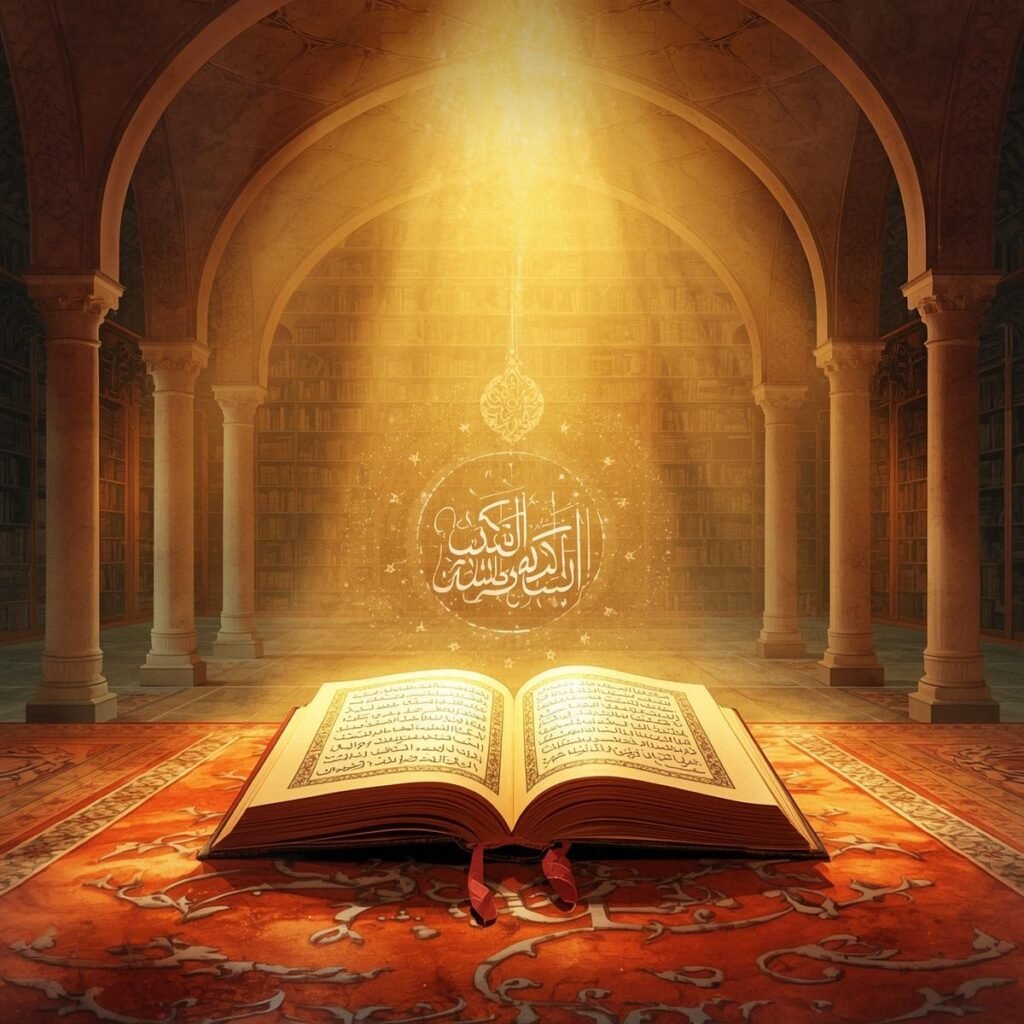
In all times, when hearts distance themselves from Allah, and faith appears to be overshadowed by worldly turmoil, Allah sends spiritual revivers – Mujaddideen – to re-illuminate the light of faith. Among those honored revivers is Imam Abu Hamid Al-Ghazali (رحمه الله), who wrote the legendary book, Iḥyāʾ ʿUlūm al-Dīn – The Revival of the Religious Sciences which transformed the hearts of believers for centuries.
This book is more than simply a compilation of rulings and narrations but lives as an ocean of Tasawwuf, ethics and divine wisdom, revealing Islam is not only about practices, but about the purification of the heart and sincerity of intention.
The Iḥyāʾ is still an ever-bright spiritual lighthouse for Sunni Muslims. It shows us how to balance ‘Ilm (knowledge) with ‘Amal (action), and Zāhir (outer deeds) with Bātin (inner states).
Summary of the Blog “Religious Sciences”
In this blog, we delve into the timeless message conveyed by Imam Al-Ghazali’s Iḥyāʾ ʿUlūm al-Dīn, and how it is an important message found in our modern and digital world. We will discuss how the five themes of this book — moderation, pure intentions, remembrance, humility, and purification — can transform souls overwhelmed by a materialistic worldview.
We will demonstrate how to apply the message of reviving the Religious Sciences via the Quran, Sunnah, and faith-based perspectives of Sufism, and what reviving the Religious Sciences means by reviving our relationship with Allah.

Features of “The Revival of the Religious Sciences”
1. Balancing Knowledge and Action
“Knowledge without action is madness, and action without knowledge is vain.” — Imam Al-Ghazali
The Iḥyāʾ instructs us that ‘Ilm must lead to Amal. One cannot profess knowledge of prayer without the humility and tears that it requires. In the age of information, Imam Al-Ghazali’s words become even more pronounced, seek your knowledge that softens your heart, not inflates your ego.
2. Purification of the Heart (Tazkiyah al-Nafs)
The heart (qalb) is the throne of Allah in the believer. Imam Al-Ghazali instructs that the illnesses of riya (showing off), hasad (envy), and takabbur (arrogance) need to be treated through zikr, muraqabah (self-watchfulness), and the company of the righteous pious.
Quranic Reference:
“Successful indeed is the one that purifies it.” (Surah Ash-Shams, 91:9)
3. Authenticity (Ikhlas) and Objective (Niyyah)
The value of an action comes from its intent. Imam Al-Ghazali begins his most famous work with Kitab al-‘Ilm – The Book of Knowledge – in which he states that the true evidence of knowledge is in seeking it for the sake of Allah.
Hadith Reference: “Actions are judged by intentions…” (Sahih Bukhari, 1)
Tasawwuf Insights from Sunni Tradition religious sciences
Tasawwuf, according to Al-Ghazali, is not a new concept; it is the inner reality of Islam that is based on the Sunnah. The purification (tazkiyah), sincerity (ikhlas), and love (mahabbah) separate the living worship from the dead.
Great Sunni Sufi teachers such as Sheikh Abdul Qadir Jilani (رحمه الله) and Khwaja Gharib Nawaz (رحمه الله) brought it back to the same idea: that outer obedience must be filled with inner light.
Story of Sheikh Abdul Qadir Jilani (رحمه الله):
Once, a disciple asked the Sheikh what was the real reason he attained such a rank in spirituality. He replied:
“By being truthful with Allah and not occupying my attention with anything else.”
That truth, is what Al-Ghazali referred to as siddiqiyyah—the path of being truthful—and is the essence of: Iḥyāʾ ʿUlūm al-Dīn — to live truthfully before Allah.

The Relevance of Religious Sciences Today
In the 21st century, we find ourselves inundated with digital distractions and moral ambiguity. Faith has often devolved into slogans, and knowledge has become associated with degrees and not based on humility.
In times like these, The Revival of the Religious Sciences is much more than a classical book, it is as if it possesses a divine call to call us back to our souls.
Imam Al-Ghazali wrote when scholars were arguing about almost everything and hearts were cold. He removed himself from fame and secluded himself until Allah filled his heart with Nur (light). His revival was not merely of the mind, but a revival of sincerity, adab, and presence with Allah.
- He divided the Iḥyāʾ into four parts – each addressing an important aspect of life:
- Acts of Worship (ʿIbādāt) – purification, prayer, zakah, fasting, Hajj.
- Social Dealings (ʿĀdāt) – marriage, livelihood, and manners.
- Destructive Traits (Muhlikāt) – envy, pride, anger, greed.
- Saving Virtues (Munjiyāt) – sincere repentance, patience, gratitude, acknowledgement, the love of Allah, and so on.
In each of these themes, Al-Ghazali unified fiqh (law) with tasawwuf (spirituality) – showing that Islam’s perfection lies within that balance.
Dua:
اللَّهُمَّ طَهِّرْ قُلُوبَنَا مِنَ النِّفَاقِ وَأَعْمَالَنَا مِنَ الرِّيَاءِ
O Allah, purify our hearts from hypocrisy and our actions from showing off.
The Spiritual Message for Today’s Muslims
Our globe’s suffering results not from a shortage of scholars but from a deficiency of sincerity. We have data but not commitment, speed, but not stillness. Imam Al-Ghazali’s revival calls upon us to slow down, to remember that true revival starts in the heart.
“A heart attached to the world is far from Allah, even if the tongue is constantly remembering Him.”
- To practice Iḥyāʾ today means:
- Seeking the knowledge that transforms.
- Practicing dhikr that humbles.
- Helping others without hoping for returns.
- Cleaning the heart with repentance daily.
Conclusion
The Revival of the Religious Sciences is more than simply a book — it’s a guide back to Allah. It teaches that Islam is lived with beauty (ihsan), sincerity, and coverage. The world may advance scientifically, but humankind’s hunger for the spirit soul stays the same; only the light of God can satisfy this hunger.
Let us not just revive the text of Islam but its spirit like Imam Al-Ghazali and the great Sufi masters.
- All Posts
- English Blogging

7 Heart-Melting Truths About Tears in Sujood,One Step Toward Allah That Changes Everything Introduction Tears can be shed either out...

The First Step to Allah: Take One Step Toward Allah and Watch His Mercy Run to You The authentic Hadith...
Introduction In all times, when hearts distance themselves from Allah, and faith appears to be overshadowed by worldly turmoil, Allah...


