

How to Read Quran Correctly with Tajweed — A Beginner’s Spiritual Guide
Introduction
The Quran is something unique to every person.
The Quran is an everlasting word from Allah that has been given to humanity as a means of encouragement, direction, health, and source of enlightenment. In addition, every Arabic letter in the Qur’an is blessed; every verse has wisdom; every recitation of the Qur’an impacts one’s heart and soul in ways that other human sounds cannot.
When Allah revealed the Qur’an, He intended for it to be read slowly, beautifully (with a pleasing voice), accurately (no mistakes), and reflected upon as you read.
This is why learning How to Read Quran Correctly with Tajweed is one of the greatest spiritual journeys a Muslim can begin.
Many Muslims desire to be more spiritually connected to Allah today, but feel distanced. One way that people reconnect their heart to Allah is through reading and reciting the Qur’an correctly.
Allah ﷻ says:
وَرَتِّلِ الْقُرْآنَ تَرْتِيلًا
“And recite the Quran with measured recitation.”
(Surah Al-Muzzammil 73:4)
Summary
In this article you will learn:
- the meaning of Tajweed
- why proper recitation matters
- how beginners can improve recitation
- common Tajweed mistakes
- the spiritual impact of Quran recitation
- Sunni Sufi perspectives on Quran adab
- practical daily Tajweed tips
- inspiring stories from the Awliya Allah

This is not only a Tajweed guide.
It is a guide to loving the Quran.
Why Tajweed Is Important in Islam
The Glorious Qur’an was revealed with precision and beauty. The Prophet Muhammad ﷺ recited each letter with care and the Sahabah learned it directly from him while giving attention to the correct pronunciation, pausing, and reciting with the beautiful manner in which it was given to him.
Learning How to Read Quran Correctly with Tajweed protects the Quran from mistakes and preserves its beauty.
If we do not recite the Qur’an with Tajweed then:
• The meanings could be changed
• The pronunciation would be incorrect
• The spiritual beauty would be diminished.
The Prophet Muhammad ﷺ said:
“Recite the Qur’an in a beautiful voice.” (Abu Dawood)
This hadith indicates that the act of reciting beautifully is something loved by Allah and commanded by Him.
By learning how to read the Qur’an properly, Tajweed includes:
• Correct pronunciation
• Proper pauses
• The characteristics of each letter
• The rhythm and flow of the Qur’an
• The respectful recitation of the Qur’an
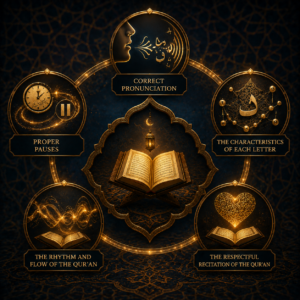
In addition to all of the technical aspects of Tajweed, it also teaches us how to show reverence for the speech of Allah.
1. Purify Your Intention Before Reading Quran
The first step in How to Read Quran Correctly with Tajweed is sincerity.
Read Quran:
- for Allah
- not for praise
- not for social media
- not to impress people
The Quran enters hearts through sincerity.
Imam Al-Ghazali (رحمه الله) explained that Quran recitation without sincerity becomes empty sound.
Before opening the Quran, say:
اللَّهُمَّ اجْعَلِ الْقُرْآنَ رَبِيعَ قَلْبِي
“O Allah, make the Quran the spring of my heart.”
When the intention becomes pure, Allah opens understanding.
2. Learn the Makharij (Pronunciation Points)
One of the most important parts of How to Read Quran Correctly with Tajweed is learning where each Arabic letter exits from.
For example:
- ق is different from ك
- ص is different from س
- ض has a unique sound
Incorrect pronunciation may change meanings completely.
Beginners should:
- learn slowly
- repeat letters daily
- practice with teachers
- listen carefully to expert Qaris
Do not rush.
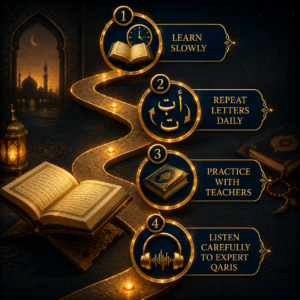
The journey of Tajweed is gradual and beautiful.
3. Read Slowly and Reflect Deeply
Muslims were instructed to recite Quran at a slow pace as per Allah’s command.
One of the biggest mistakes beginners make while learning How to Read Quran Correctly with Tajweed is rushing.
Examples of this can be seen in the practice of Sahabah, who on occasion would spend hours repeating one verse to meditate upon its meaning.
In addition to enhancing comprehension, slow reading provides an opportunity to have one’s heart soften, develop a greater ability to naturally perform tajweed correctly and create a deeper connection to Allah (swt) through His divine revelations.
Sunni scholars agree that reciting Quran without reflecting upon what is being recited is missing out on the full benefit of this holy book.
The Quran was not intended to “be completed quickly” but rather to “change a believer’s heart.”
4. Listen to Skilled Quran Reciters
Listening improves Tajweed dramatically.
One of the easiest ways to learn How to Read Quran Correctly with Tajweed is listening repeatedly to:
- Mishary Rashid
- Minshawi
- Husary
- Abdul Basit
- other authentic reciters
Listening trains:
- pronunciation
- rhythm
- pauses
- melody
The heart also absorbs spiritual beauty through listening.
Allah says:
فَاسْتَمِعُوا لَهُ وَأَنصِتُوا
“Listen carefully to the Quran and remain silent.”
(Surah Al-A‘raf 7:204)
5. Practice Daily Even If Small
Consistency matters more than quantity.
A beginner learning How to Read Quran Correctly with Tajweed should practice every day even for:
- 10 minutes
- one page
- one surah
- one rule
The Prophet ﷺ said:
“The most beloved deeds to Allah are those done consistently.”
(Sahih Bukhari)
Daily practice builds fluency slowly and naturally.
6. Learn Tajweed With a Qualified Sunni Teacher
Books and YouTube help, but direct correction is essential.
A teacher helps identify:
- pronunciation errors
- stopping mistakes
- hidden Tajweed issues
For anyone serious about How to Read Quran Correctly with Tajweed, a teacher is extremely important.
The Quran has always been transmitted heart-to-heart and teacher-to-student.
7. Recite With Humility and Tears
The goal of Tajweed is not performance.
The goal is connection with Allah.
Some people recite beautifully but their hearts remain hard.
Others recite simply yet cry sincerely.
The Prophet ﷺ and the Awliya Allah recited Quran with humility, tears, and reflection.
Khwaja Gharib Nawaz (رحمه الله) taught:
“The Quran does not only enter the ears. It enters the heart.”
One of the deepest secrets of How to Read Quran Correctly with Tajweed is reciting with sincerity and brokenness before Allah.
Deep Sunni Tasawwuf Reflections
1. Tajweed Is Adab Toward Allah’s Speech
Sunni Tasawwuf teaches that proper Quran recitation is part of spiritual etiquette.
The believer handles the Quran with:
- respect
- purity
- humility
- love
The Awliya Allah often wept before even opening the Quran.
2. Quran Softens the Heart
Allah says:
اللَّهُ نَزَّلَ أَحْسَنَ الْحَدِيثِ
“Allah has revealed the best speech.”
(Surah Az-Zumar 39:23)
Imam Al-Ghazali (رحمه الله) explained that Quran removes spiritual rust from the heart.
3. Tajweed Protects the Sacredness of Revelation
The Quran is divine revelation.
Reciting carelessly without effort contradicts the respect due to Allah’s words.
Learning How to Read Quran Correctly with Tajweed is therefore an act of love.
4. The Awliya Loved Quran Deeply
Sheikh Abdul Qadir Jilani (رحمه الله) reportedly spent nights reciting Quran in tears.
The Chishti saints treated Quran recitation as nourishment for the soul.
5. Beautiful Recitation Brings Spiritual Healing
Many hearts return to Allah simply by hearing Quran beautifully recited.
This is among the miracles of the Quran.
A young boy struggled for years with Tajweed. He felt embarrassed because others recited more beautifully.
One night his teacher told him:
“Allah loves the struggling reciter.”
The boy continued practicing daily.
Years later, his recitation softened hearts and brought people closer to Allah.
This story reminds us that learning How to Read Quran Correctly with Tajweed is not about perfection overnight.
It is about sincerity, patience, and love for Allah’s Book.
Beginner Tajweed Checklist
- Learn Arabic letters properly
- Practice Makharij daily
- Read slowly
- Listen to expert Qaris
- Study basic Tajweed rules
- Read consistently
- Sit with righteous teachers
- Reflect on meanings
- Make dua before reciting
- Keep sincere intention
Dua for Understanding Quran
اللَّهُمَّ فَقِّهْنِي فِي الْقُرْآنِ
O Allah, grant me understanding of the Quran.
Dua for Beautiful Recitation
اللَّهُمَّ زَيِّنْ صَوْتِي بِالْقُرْآنِ
O Allah, beautify my voice with the Quran.
Dua for Guidance
اللَّهُمَّ اجْعَلِ الْقُرْآنَ نُورَ قَلْبِي
O Allah, make the Quran the light of my heart.
Conclusion
Learning How to Read Quran Correctly with Tajweed is more than learning pronunciation.
It also includes understanding how to be humble; patient; sincere; and what it means to connect to Allah through reading the Quran.
The Qur’an has an effect on people’s heart. It has the ability to heal a broken heart; soften a hardened heart; guide the lost; and give comfort to the grieving.
All people who start learning Tajweed have taken one step closer to the light of Allah.
As you learn to read the Qur’an, don’t ever be discouraged by any difficulties you have in pronouncing the letters correctly.
Strengthen Your Connection With the Quran
7 Heart-Melting Ways to Teach Children the Quran